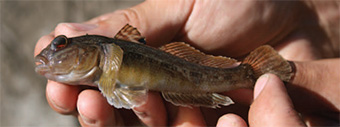
 This is a photo of the round goby." width="340" height="127" />
What you need to know about the round goby. Includes habitat, identifying features and what you can do to reduce its impact.
Round Goby (Neogobius melanostomus)
The round goby is a small, bottom-dwelling invasive fish. Native to the Black and Caspian seas in eastern Europe, it was first found in North America in 1990 in the St. Clair River north of Windsor, Ontario. Researchers believe the fish was brought to North America in the ballast water of ships from Europe. In less than a decade the round goby has successfully spread through all five Great Lakes and has begun to invade inland waters. In some areas the fish has reached densities of more than 100 fish per square metre.
Round goby prefer waters with rocky and sandy bottoms. They feed aggressively on insects and other small organisms found on lake and river bottoms. Adult round goby eat large quantities of zebra and quagga mussels, and occasionally small fish and fish eggs. Their aggressive eating habits and ability to spawn several times each season have helped them multiply and spread quickly.
Outside its native range, the round goby has been found in all five Great Lakes and many of their tributaries. Round goby are also found in some inland waters in southern Ontario such as Lake Simcoe, the Trent River, Rice Lake, and parts of the Otonabee River.
The round goby’s aggressive habits and rapid spread have had serious impacts on native species.
To prevent the spread of this invasive species, the Ontario government has banned the possession of live round goby and the use of round goby as a baitfish.
This is a photo of the round goby." width="340" height="127" />
Adult round goby are six to 16 centimetres long with a cylindrical body and a rounded to blunt snout. The round goby looks similar to several species of fish found in the Great Lakes, including the invasive tubenose goby and native sculpins (Myoxocephalus thompsoni, and Cottus sp.).
Check the chart below to identify round goby, tubenose goby and native sculpins.
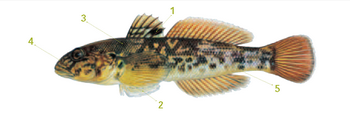 This is an illustration of a round goby with distinguishable markings listed below." width="350" height="120" />
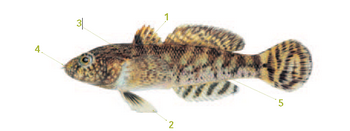 This is an illustration of a tubenose goby with distinguishable markings listed below." width="350" height="131" />
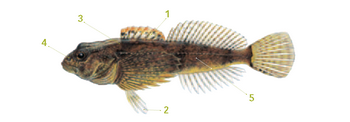 This is an illustration of a sculpin with distinguishable markings listed below." width="350" height="122" />
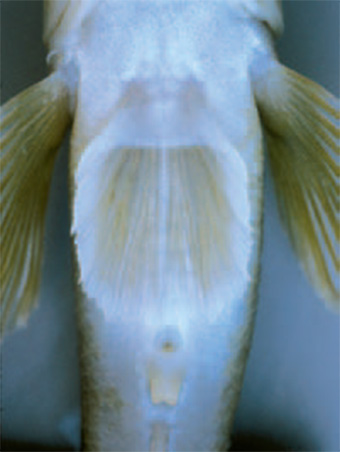 This is a photo showing the pelvic fin of the round goby." width="340" height="452" />
Please contact the Invading Species Hotline at 1-800-563-7711 .
